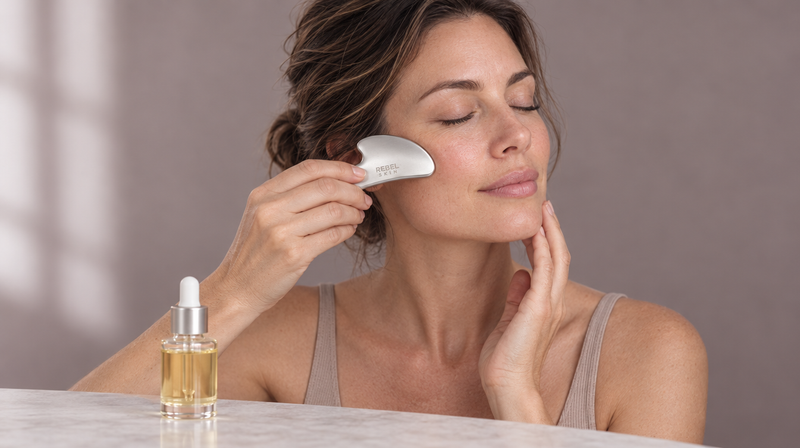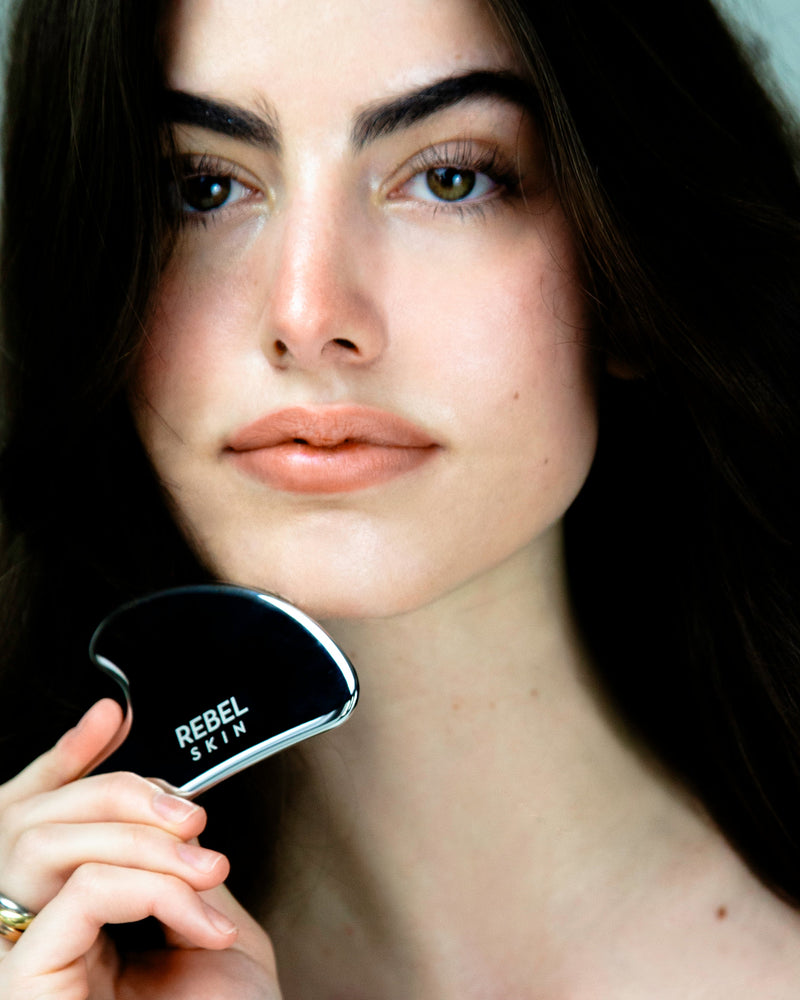


Gua sha tools come in several shapes, and each is designed for a different part of the face. Knowing the differences helps you pick a tool that is comfortable and easy to use.
Popular shapes
- Heart shape: a curved edge and a pointed tip make it versatile for most areas of the face and neck.
- Fish tail: a precise shape that suits smaller areas, such as around the nose and under the eyes (with very light pressure).
- Wing shape: broader, rounded edges that cover larger areas like the cheeks and forehead quickly.
Smooth edge or toothed edge?
Smooth edge
- Gentle and comfortable, a good choice for sensitive skin.
- Versatile for all areas of the face.
- Beginner-friendly.
Toothed edge
- Gives a more pronounced, massage-like sensation along the muscles.
- Needs a lighter hand and some experience to stay comfortable.
- Less suitable for beginners or sensitive skin.
How to choose
- Start gentle: if you are new or have sensitive skin, begin with a smooth edge.
- Match the area: pick the shape that fits the part of the face you want to work on.
- Think about feel: some people like a firmer sensation, others prefer very soft strokes. Both are fine.
Whatever you choose, use light pressure on an oiled face. Research on lasting changes from gua sha is limited, so think of it as a relaxing ritual. Avoid broken skin, sunburn and active breakouts, and ask a doctor if you have a skin or circulation condition.
Browse our gua sha tools or read How to use a gua sha.
Keep learning